


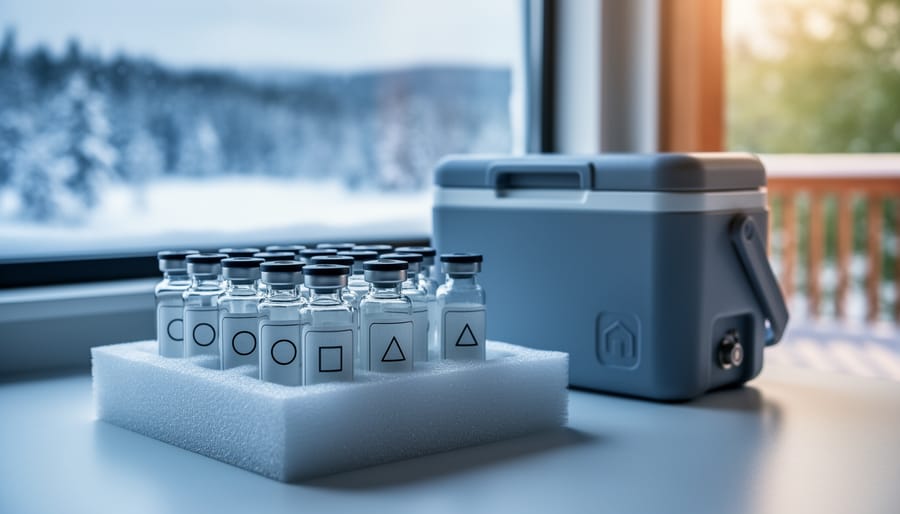
Keep research peptides cold, dry, dark and sealed, and protect them from Canada’s temperature swings on the way to your door. That’s the whole game. Lyophilized (freeze-dried) peptides from Kylo Peptides and other suppliers generally sit best in a freezer or fridge, away from light and moisture, but a minus 30 January delivery and a sweltering July porch can undo careful storage in a matter of hours.
If you’re newer to lab-style products and want a plain-language starting point, our beginner-friendly guide shows how we explain product safety in everyday terms, and we’re applying the same approach here. Suppliers list handling and storage details for a reason: how a vial is kept matters as much as how it was made.
This article covers laboratory research storage only. No medical claims, no dosing talk. We’ll walk through the basics, then winter and summer specifics, including what to do when a parcel sits outside, a quick-reference table, common mistakes, and the checks worth making before you buy. We’ll also show you how to spot a damaged vial.
Got a storage trick that’s worked through a Prairie cold snap or a humid Ontario August? Share it in the comments. Real-world experience from the community makes guides like this better.
Why Canadian Weather Is Tough on Delicate Research Peptides
Freeze-Dried vs. Reconstituted: Why the Difference Matters
Freeze-dried powder is generally the hardier form of a research peptide. With the water removed, there’s far less chance for the molecules to break apart, so a sealed vial of powder tends to cope better with Canada’s temperature swings. Once a vial is mixed with liquid, that changes quickly. Liquid solutions usually have shorter shelf lives and stricter storage rules, and the supplier’s guidance on lyophilized vs reconstituted stability shows why the two forms shouldn’t be treated the same way.
Here’s a quick refresher, and our research storage glossary is handy if you want more plain-English definitions:
- Lyophilized
- Freeze-dried into a dry powder, which is the more stable state for storage.
- Reconstituted
- Mixed with a liquid after being a powder, which usually means tighter storage limits.
- Degradation
- The gradual breakdown of a compound, sped up by heat, moisture and light.
- Freeze-thaw cycle
- One round of freezing and then thawing, which can stress delicate materials.
- Desiccant
- A moisture-absorbing packet kept near vials to cut down on humidity.
Exact temperatures and timeframes differ by compound, so always follow the supplier’s documentation and certificate of analysis for product-specific instructions.
Storing Research Peptides in a Canadian Winter
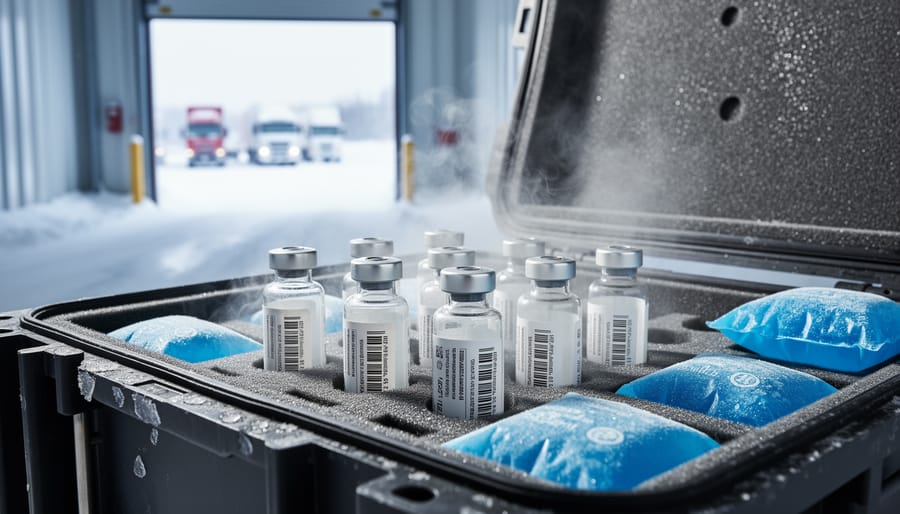
Deliveries on Freezing Days
Winter delivery is where a lot of cold-weather trouble starts, so a little planning goes a long way. Here’s a simple routine for freezing days.
Before it arrives: Watch the tracking and check the forecast. If a parcel is due on the coldest day of the week, ask the seller whether they can hold shipment until conditions improve, or choose a faster service so it spends less time in unheated trucks and depots.
Skip the porch: A box left on a frozen step can sit for hours in deep cold. Where possible, require a signature, redirect the parcel to a pickup point or carrier depot, or ask a neighbour or coworker to grab it the moment it lands. Delivering to somewhere that’s staffed and heated beats a mailbox every time.
When it arrives: Bring it inside promptly, but leave it sealed. Let it warm up gradually in a room-temperature spot, away from radiators and vents, before opening. That helps cut down on condensation forming on cold vials.
Inspect everything: Look over the outer box for crushing, tears or damp patches. Then check each vial for cracks, leaks, loose caps, or anything that looks off, such as a cloudy liquid or powder that has clumped. Photograph any damage right away and contact the seller with your order details. If something looks compromised, don’t take chances with it.
Always compare what you see against the supplier’s own storage instructions.
Storing Research Peptides in a Canadian Summer
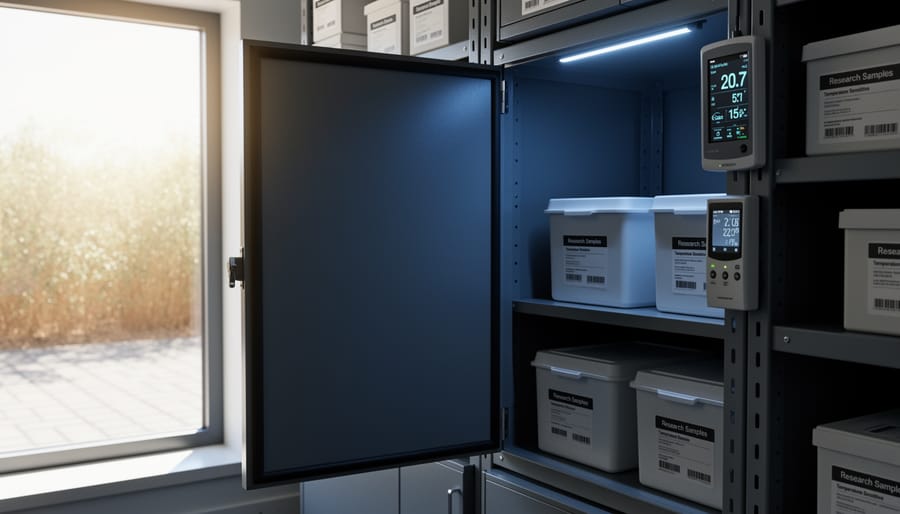
Humidity, Heat Waves and Power Outages
Moisture is the quiet enemy of freeze-dried powder. Lyophilized peptides tend to be hygroscopic, meaning they pull water vapour out of the air. Once a powder absorbs moisture, it can clump, break down faster, and become harder to handle accurately in the lab. Humid Canadian summers, especially in basements and apartments without air conditioning, make this a real risk.
A few simple habits help. Keep vials sealed until you actually need them, and let a cold vial warm to room temperature before opening it, since opening it cold invites condensation inside. For extra protection, place vials in an airtight container with a fresh desiccant pack (silica gel is common). Check the pack now and then, and replace it if it looks saturated. Skip the bathroom and laundry room, where humidity spikes constantly.
Summer storms bring another headache: power outages. If your fridge or freezer goes down, don’t open the door more than necessary, because a closed unit holds its temperature far longer. A small thermometer inside lets you see what’s happening without guessing. If the outage drags on, move vials into a cooler with ice packs, keeping the vials away from direct contact with the ice. Afterward, check labels and your supplier’s documentation, and if you’re unsure whether a vial stayed within its safe range, treat it as compromised and dispose of it properly.
Season-by-Season Storage Cheat Sheet
Here’s the quick version. Canada’s seasons pull storage in opposite directions, so it helps to see them side by side. For more everyday habits worth borrowing, these storage and safety tips show the same careful mindset applied to a different product.
| Situation | Winter Risk | Summer Risk | General Best Practice |
|---|---|---|---|
| Delivery | Parcel freezes on a porch or in a mailbox | Parcel bakes in a hot truck, locker or mailroom | Track it, arrange pickup or a signature, and inspect on arrival |
| Short-term storage | Cold garage swings, condensation indoors | Sunny windowsills, humid basements | Keep sealed, dark and in a stable spot |
| Long-term storage | Dry indoor air, unheated spaces | Heat waves, power outages | Use a monitored cool location with desiccant packs |
| Travel or moving | Cold car trunks overnight | Hot parked cars | Never leave vials in a vehicle; carry them with you |
Think of the table as a starting point, not a rulebook. Exact temperatures and shelf life vary from one compound to the next, so the supplier’s label and the certificate of analysis always win over general advice. If your vial’s paperwork says something different from this cheat sheet, follow the paperwork.
Monitoring is the habit that ties it all together. A cheap min/max thermometer near your storage spot takes the guesswork out of seasonal swings, and a dated note on each vial helps you track how long it’s been sitting. Remember, this is for laboratory research use only, never for personal use.
Mistakes to Avoid (and How to Spot a Storage Problem)
Most storage problems come from small, avoidable habits. Here are the common ones.
Fridge door storage. The door swings through the biggest temperature changes every time someone grabs milk. Store vials on a middle shelf toward the back, where conditions stay steadier.
Repeated freezing and thawing. Each cycle stresses the material. If your supplier’s instructions allow freezing, ask whether the vial should be divided into smaller portions, rather than putting the same vial through the freezer again and again.
Skipping labels and dates. A vial with no label and no arrival date is a guessing game. Write the compound name, the date received and the date opened on every vial.
Trusting vague storage claims. “Store in a cool place” isn’t an instruction. Reputable sellers give specific storage details and back them with documentation. Make a habit of reading labels the way you would when you check product details on any other purchase: look for real specifics, not marketing language.
Visual warning signs. Even careful storage can fail, especially after a heat wave or a frozen delivery. Look for:
– Clumping or a collapsed, melted-looking powder cake
– Discoloration, such as yellowing
– Cloudiness or floating particles in a liquid
– Damaged seals, cracked vials or signs of leakage
If something looks off, don’t take chances. Compromised material shouldn’t go back on the shelf or be used for experiments, since you can’t rely on the results. Dispose of it according to your local rules for laboratory or chemical waste, and keep a note of what went wrong so it doesn’t happen twice.
Buying From Online Marketplaces: Questions to Ask Before You Order
Online marketplaces make it easy to order almost anything, but easy isn’t the same as safe. Before you buy anything marketed for research use, treat the listing like a product you’d inspect in person. Be skeptical of unverified sellers, vague storage claims and listings with no paperwork. Look for clear shipping and storage details, third-party testing documentation, and honest “research use only” labelling. Products sold for research are not meant for human consumption, and they are not vaping products. Whatever you order, follow Canadian laws and regulations.
How do I know if a seller ships safely in extreme weather?
Look for stated shipping practices, such as insulated packaging or cold-weather and heat-wave policies, and ask directly if it’s not listed. A seller who can’t explain how parcels are protected in January or July is a red flag.
What paperwork should come with a research product?
Expect clear labelling, storage instructions and a certificate of analysis from an independent lab. If any of these are missing, ask the seller before you order.
Where can I check current Canadian rules?
Check official Canadian government websites, such as Health Canada, since regulations can change. When in doubt, confirm before you buy.
Should I trust a storage claim with no testing documentation?
No. A storage claim you can’t verify is just marketing, so treat it with caution.
Have you spotted a red flag on a listing, or had a shipping surprise in a cold snap or heat wave? Share your experiences in the comments so the community can learn from them.
Canada doesn’t hand you an easy storage year. January brings frozen porches and condensation surprises, and July brings hot parcel lockers and humid basements. That’s why handling research peptides well is a year-round job, not a seasonal one.
The good news is that a few simple habits go a long way. Track your deliveries, skip the porch drop-off, store vials somewhere cool, dark and dry, keep powders sealed, and give every vial a quick inspection when it arrives. Write down dates, check labels, and when something looks off, don’t take chances.
One last reminder: research peptides are for laboratory research only. They aren’t vaping products and they aren’t meant for human consumption. Always follow your supplier’s instructions and your local regulations.
Here at Vaping Front, we’ll keep being upfront about what we know and what we don’t. Got a storage tip, a shipping horror story, or a question? Drop it in the comments and help the community learn.